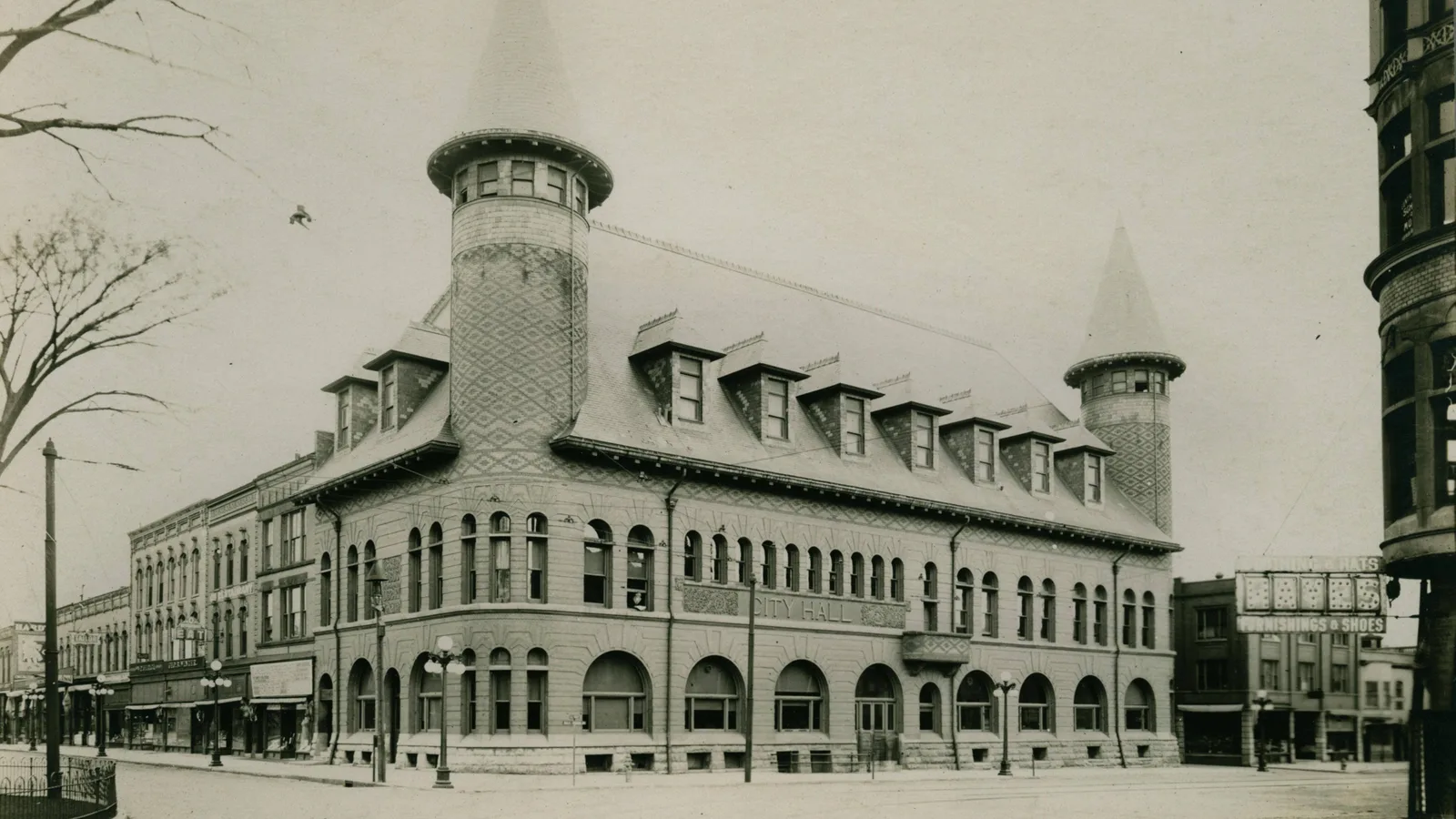
Evanston's former City Hall in an early 20th-century photograph. Photo: Sloan, Percy H. (Percy Haydn), 1867- / Wikimedia Commons, Public domain
Evanston businesses that have never landed a contract with the city, a school district or Northwestern University were invited to a Feb. 8, 2013 seminar called Evanston Procurement 101. The session was meant to explain how large local institutions buy goods and services and how a small firm gets in the door.
The city organized it with several of the biggest purchasers in town. Presentations were planned by the City of Evanston, Evanston/Skokie School District 65, Evanston Township High School District 202, Northwestern University and Rotary International. Each was expected to describe its bidding practices, its purchasing process and the projects it anticipated.
The rules behind the event
The seminar was sponsored by the city’s Minority, Women and Evanston Business Enterprise Development Committee, chaired by Ald. Peter Braithwaite (2nd Ward). It followed years of complaints that local firms were not getting enough work. According to the Daily Northwestern, city contracts above $20,000 require bidders to subcontract at least 25 percent of the work to minority-owned, women-owned or Evanston-based businesses. The city also strongly encourages that at least 3 percent go to a local business, and it can pick a local bidder over the lowest bidder when the price gap is within 5 percent.
A separate local-hiring program, expanded in 2010, applies to construction projects over $250,000 and requires residents to be hired for at least 15 percent of work hours.
The city reported that 40 percent of its contracts above $20,000 between January and October 2012 went to minority-, women- or Evanston-owned firms. Smaller purchases looked weaker. A 2011 review found only 15 percent of purchases under $20,000 were made locally, and the city had spent little in Evanston on printing and information technology, two categories organizers wanted to highlight.
Critics, including community members Bennett Johnson and Randy Roebuck, said enforcement had been weak and that Northwestern’s purchasing process was hard to reach. Northwestern, as a private institution, did not set a contracting target and pointed to cost and quality as the deciding factors. The city’s 2013 budget included $30,000 for a compliance officer.
For a small contractor, the practical value of a session like this is learning which office to call, what paperwork a bid requires and when large projects are expected to come up for bid.
Source: Daily Northwestern, Feb. 8, 2013.
Daniel Okafor covers business, startups and the Innovators section for The Evanston Edge.