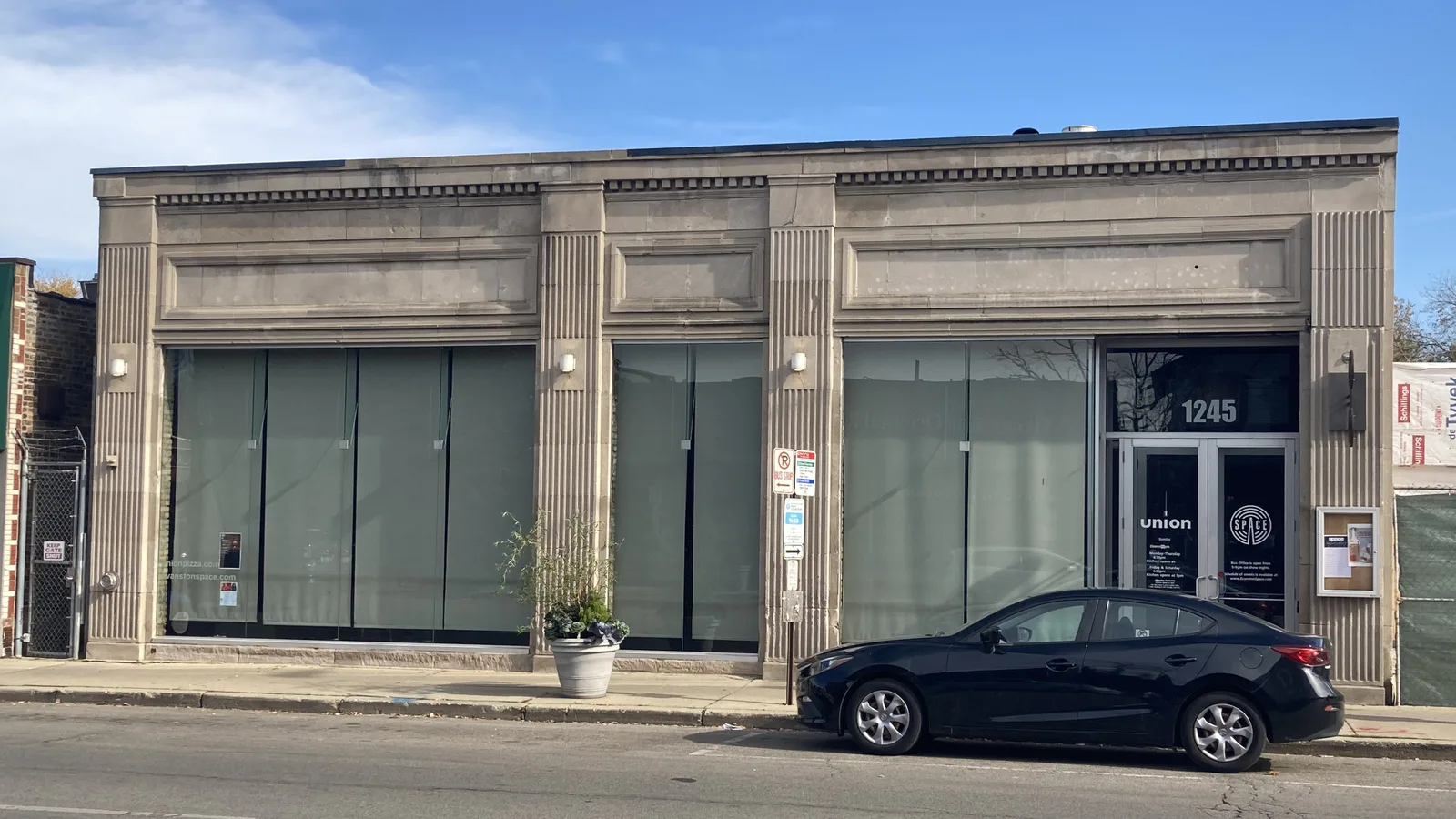
The Evanston S.P.A.C.E. performance venue building on Dempster Street. Photo: Nick Number / Wikimedia Commons, CC BY 4.0
A study of performing arts space in downtown Evanston, released in early 2013, concluded that the city could support an arts corridor linking existing stages, the downtown core and Northwestern University’s campus. The Downtown Evanston Performing Arts Study, known as DEPAS, recommended three new venues and a task force to guide the next steps, the Daily Northwestern reported in January 2013.
Where the money came from
The study was paid for with a $50,000 Our Town grant that the City of Evanston received from the National Endowment for the Arts in 2011. The NEA’s Our Town program supports projects that tie arts activity to community planning. WBEZ reported that the Evanston award was the only one of its kind in Illinois that year.
DEPAS followed an earlier look at whether the former Varsity Theatre could be converted into a performing arts center. That work showed the city needed a broader plan, which the grant made possible. Reports on the new study said conversion of the Varsity would be costly and pointed instead to other downtown sites.
The team and the findings
HBRA Architects led the five-month effort with Schuler Shook Theatre Planners, Arts Consulting Group and Construction Cost Systems. The consultants worked through a site analysis, an architectural study, a financial plan and an action plan.
Their programming work identified a need for three venues. One would hold two flexible theaters seating 250 and 299. A second would be a fixed end-stage theater of 400 seats for dance and music. The third would hold a 400-seat and a 100-seat theater to serve as a home for a resident theater company.
The demand came from Evanston’s own arts groups. Piven Theatre, Next Theatre, Light Opera Works and The Actors Gymnasium all began in small storefront spaces and grew past them. Groups in that position have sometimes left for Chicago or other suburbs, and the study was meant partly to keep them in town.
What came next
The Daily Northwestern said the report suggested tax increment financing as one possible funding source, while city officials stressed the need for a plan that could succeed financially. One Northwestern Medill professor supported the goal but argued that new venues should not lean on city money. A task force was the proposed next step, and the city was recruiting members for a downtown arts panel by October 2013.
Sources: Daily Northwestern, WBEZ and the HBRA Architects project page.
Rachel Lindqvist covers community life, the lakefront, dining and the arts for The Evanston Edge.