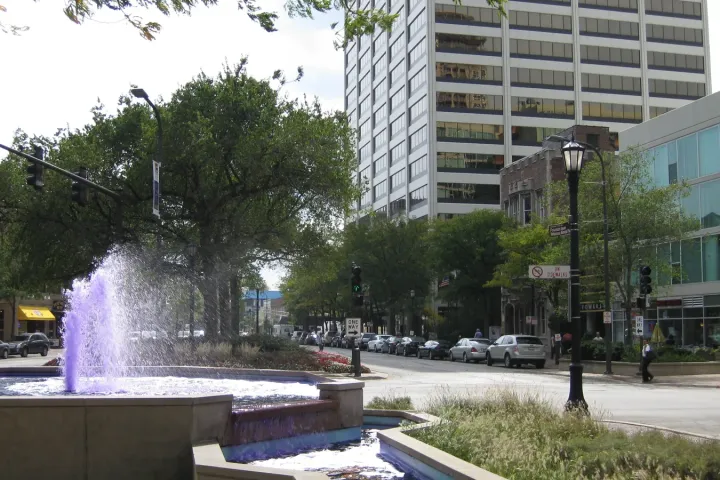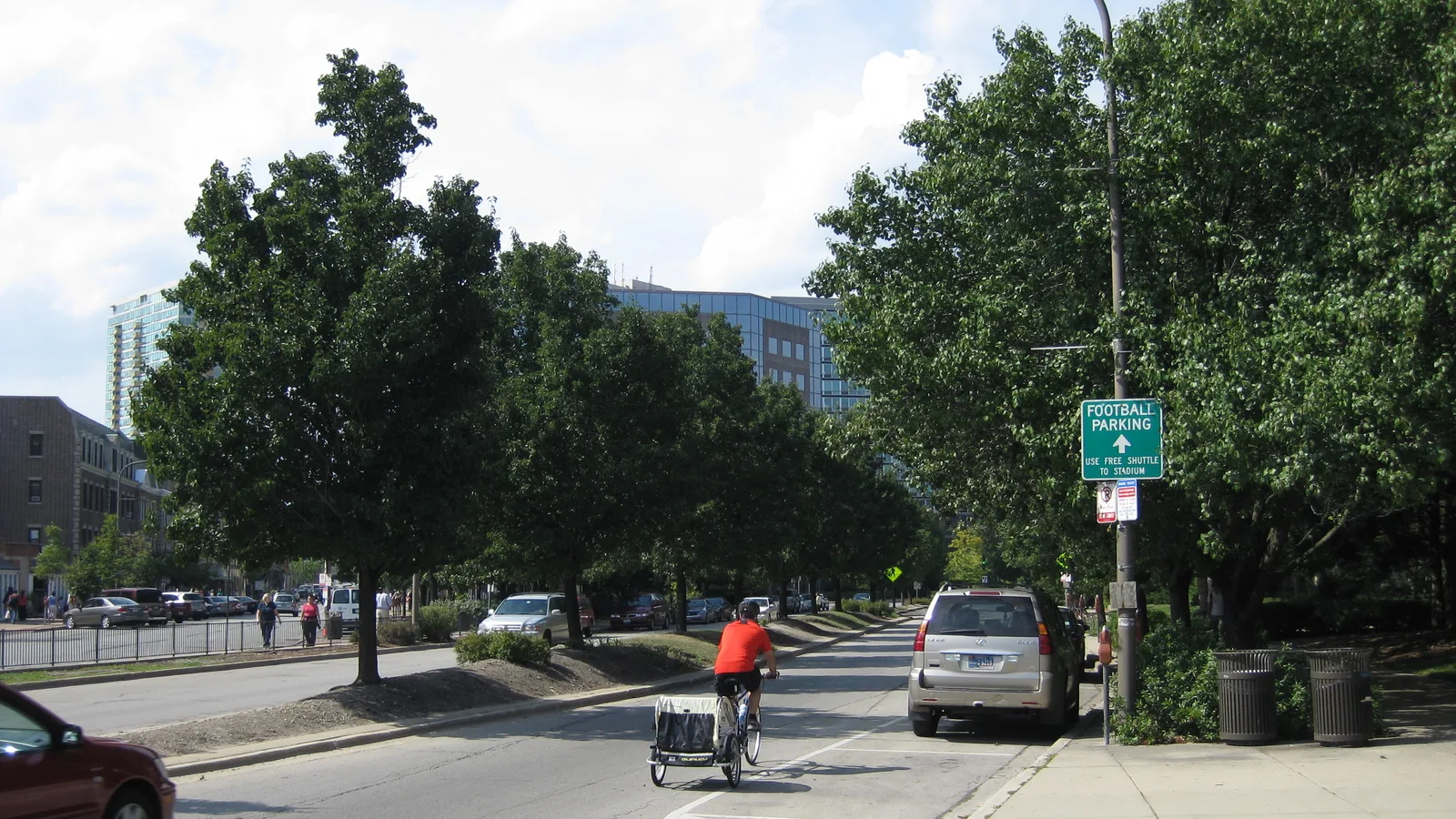
A tree-lined street and shops in Evanston. Photo: Eric Fredericks from Rancho Cordova, CA, United States / Wikimedia Commons, CC BY-SA 2.0
Two numbers about Evanston’s business community get repeated often. In 2012, 12.3 percent of the city’s 9,259 businesses were Black-owned. In 2017, 24 percent of its 2,041 employer firms were woman-owned. Both come from the U.S. Census Bureau’s QuickFacts profile for Evanston. They are useful, but they answer narrower questions than they seem to.
Two different denominators
The first figure counts businesses of every size in the 2012 data. Simple arithmetic puts 12.3 percent of 9,259 at roughly 1,100 firms, though the Census Bureau’s own tables are the place to check an exact count. The second figure is limited to employer firms, meaning businesses with paid employees. Of 2,041 such firms in 2017, 24 percent works out to roughly 490.
Those two numbers should not be set side by side as if they described the same slice of the economy. A city can have thousands of sole proprietors, consultants and freelancers who operate as businesses but have no payroll. They can appear in the first kind of count and not the second. A 12 percent share among all businesses says nothing about what share of employer firms are Black-owned, and a 24 percent share among employer firms says nothing about woman-owned firms without employees.
Five years apart
The years differ too. The Black-owned figure is from 2012 and the woman-owned figure from 2017. Anyone comparing Evanston with another town, or with its own past, needs matching years and matching definitions. Neither figure shows a trend by itself, and neither says whether the share has risen or fallen since.
What the data does not measure
An ownership share counts firms, not their size. A one-person design studio and a restaurant with 40 employees each count once. The percentages say nothing about revenue, payroll, how long businesses last, or whether owners can get loans. A firm can also be both Black-owned and woman-owned, and a single headline percentage cannot show that overlap.
Nor do they say where in Evanston the businesses operate. Downtown storefronts, home offices and shops along Howard Street or Dempster Street are all folded into one citywide percentage.
Readers who want current figures should go to the Census Bureau’s QuickFacts and its business survey tables directly, since the numbers above reflect only the years cited.
One practical point for readers: percentages like these can hide small numbers. A city of Evanston’s size can see a share move several points if a few dozen firms open or close, so a single year’s figure is better read as a rough range than a precise measurement. Comparing it with neighboring North Shore communities, using the same survey and the same year, would give a fairer sense of where Evanston stands.
Used with those limits in mind, the figures are a reasonable starting point for anyone writing a grant application, planning a business district program or simply wondering who runs the shops on Davis Street. They are a snapshot of ownership, not a measure of success.
Figures: U.S. Census Bureau QuickFacts.
Add The Evanston Edge as a preferred source on Google (opens in a new tab)