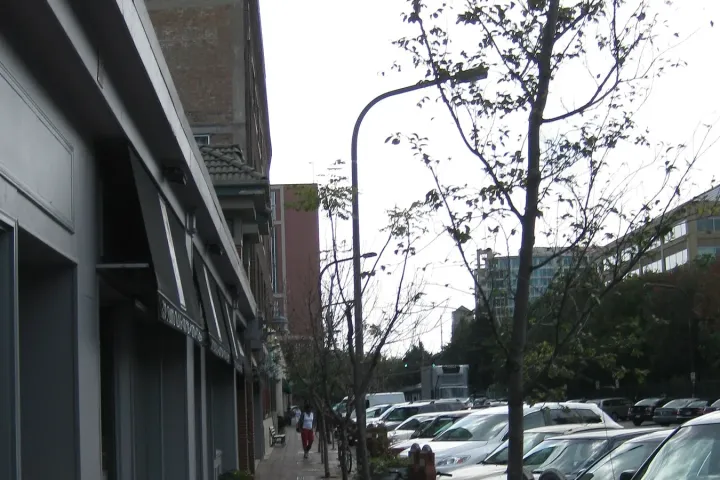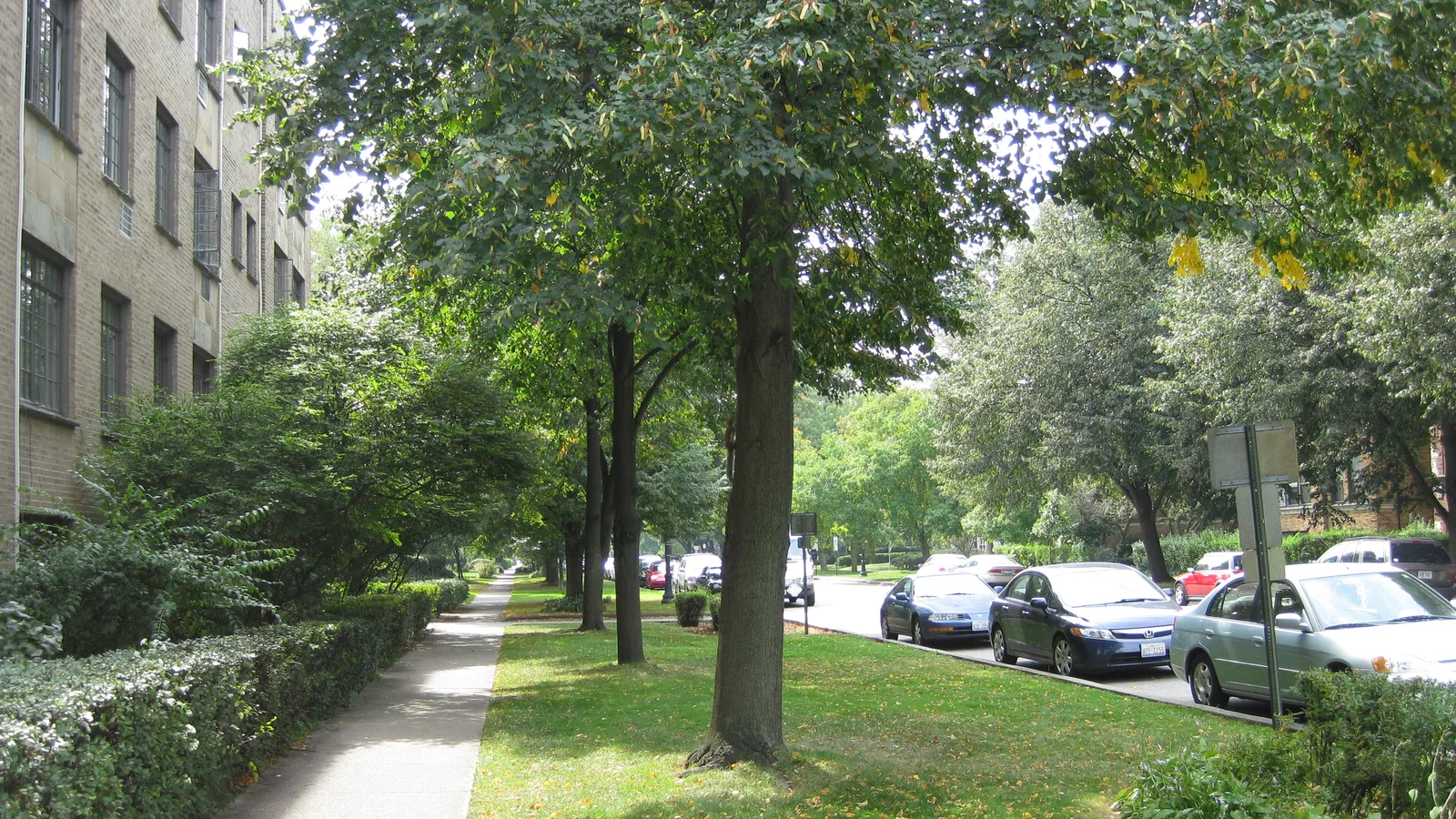
Apartment buildings and a tree-lined walk in Evanston. Photo: Eric Fredericks from Rancho Cordova, CA, United States / Wikimedia Commons, CC BY-SA 2.0
Evanston’s reparations effort is often described in a single sentence, but it is really a series of decisions made over several years: a funding vote, a committee, a first program, and then a drawing to decide who would be paid first. Here is how those pieces fit together, based on local reporting and reference sources.
From a funding vote to a first program
The groundwork came in 2019. The City Council voted 8-1 on Nov. 25, 2019, to commit $10 million over ten years from the city’s 3% tax on cannabis retailers. Alderwoman Robin Rue Simmons is identified as the architect of the effort.
The first concrete program followed. On March 22, 2021, the council approved the Local Reparations Restorative Housing Program, again by an 8-1 vote. It is described as the first U.S. city program to pay reparations to Black residents, or their descendants, who were harmed by discriminatory housing practices between 1919 and 1969. That time frame is the same one used to define eligibility.
What the $25,000 can pay for
The benefit was set at $25,000 per eligible household. In its original form it was housing money, not a check. Recipients could put it toward a down payment on a new home, toward an existing mortgage, or toward renovating a home they already owned, according to the Daily Northwestern’s January 2022 reporting. The city later widened the options. Reference accounts say it added a cash alternative, so that a qualifying person could choose between the housing benefit and a direct payment.
Who qualified, and how the first group was chosen
The program sorts applicants into two groups. “Ancestors” are people who lived in Evanston as adults at some point between 1919 and 1969. “Direct descendants” are people whose parents or grandparents fit that description. Ancestors are served ahead of direct descendants.
In January 2022, the Reparations Committee held a drawing at a meeting livestreamed from the Fleetwood-Jourdain Center. Committee members pulled numbered ping-pong balls from a bingo cage to set the order in which 122 qualified ancestors would be paid. The Daily Northwestern reported that the first 16 names on that list would receive their benefits from the initial $400,000 budgeted for the program. The other 106 would be paid in draw order as the council set aside more money. A nonprofit, Community Partners for Affordable Housing, was to manage the benefits for the first 16.
The random draw was a way of ordering a list that was longer than the money available. It did not rank people by need or by how long they had lived in the city.
Money and pace
The gap between the $10 million pledge and the first budget was visible from the start. The housing program was the first piece of a larger initiative, and about $9.6 million of the pledge remained for other efforts at that point. By early 2023, roughly $400,000 had been distributed to 16 recipients, while about 620 Black residents were either on the waiting list or had applied.
The program has also drawn a legal challenge. A conservative legal group sued in 2024, arguing that race-based eligibility violates the Equal Protection Clause of the 14th Amendment, and that a federal judge allowed the case to proceed in 2026. Readers following the program should check current court and city records for where things stand.
Margaret Whitfield is the editor of The Evanston Edge and covers local government, development and neighborhoods.