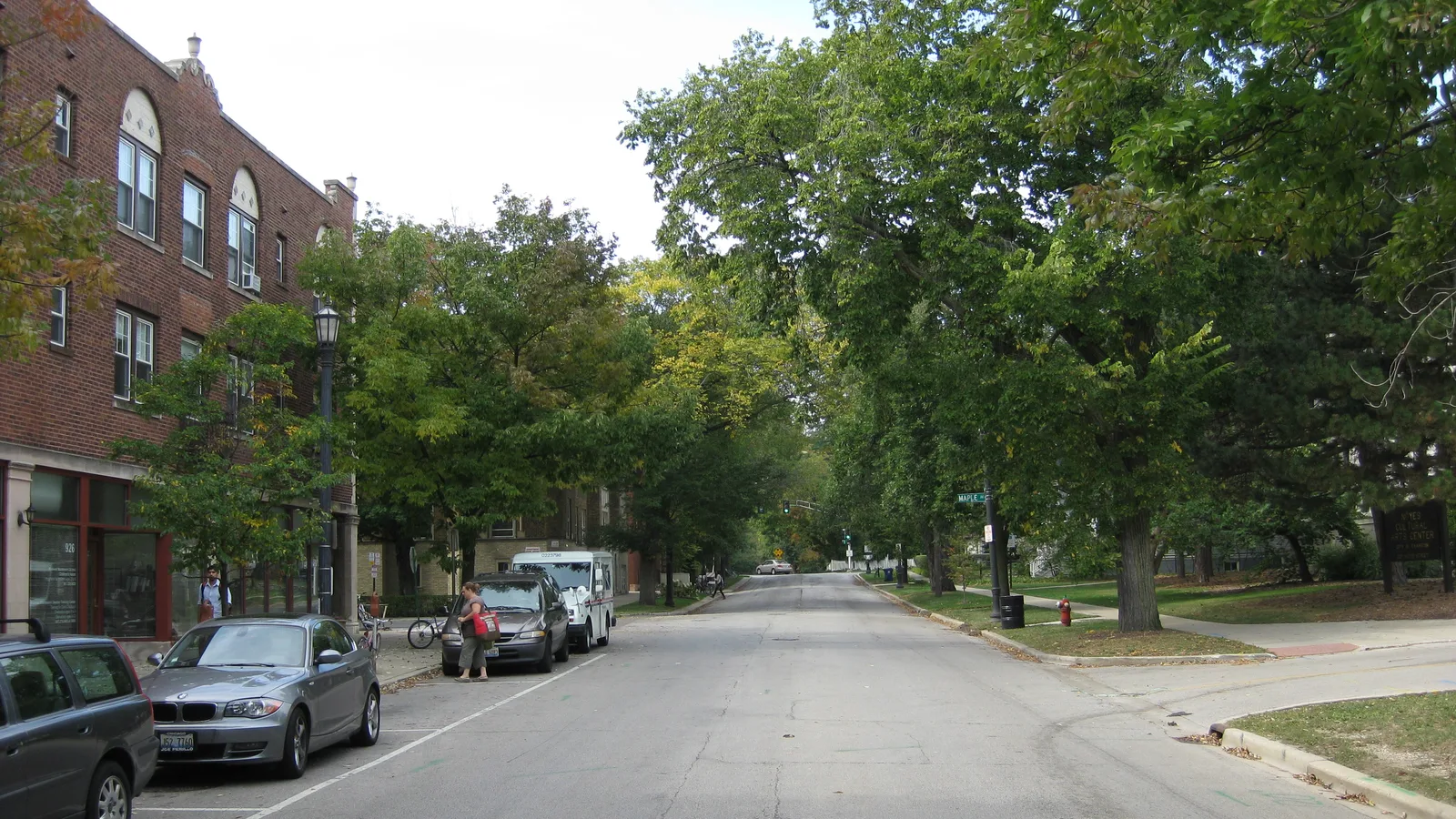
A residential street in Evanston with brick apartment buildings. Photo: Eric Fredericks from Rancho Cordova, CA, United States / Wikimedia Commons, CC BY-SA 2.0
Black History Month in 2013 put a spotlight on the Shorefront Legacy Center, the Evanston archive that collects the records of Black life on the North Shore. Its founder, Dino Robinson, started gathering documents in 1995 to preserve the history of African American communities in Evanston, Lake Forest and Glencoe, according to the Daily Northwestern. The center is based on Dewey Avenue in Evanston.
Shorefront describes itself as a community archive, library, educational resource and research center. Its holdings are the reason much of what is known about Evanston’s west side can be told with documents, not just memory.
The first Black alderman
One of the best-documented stories in the collection is that of Edwin B. Jourdain Jr., a journalist who became Evanston’s first Black alderman. He represented the Fifth Ward, which covered the predominantly Black west side, and took office in April 1932 after a campaign marked by the rescinding of a first vote that he had won. According to Harvard’s Legacy of Slavery project, which drew on the Edwin B. Jourdain Jr. Papers held at Shorefront, he served 17 years and lost his bid for re-election in 1947.
His agenda was a long list of local fights over equal access. He pressed theaters to treat Black patrons equally, pushed for the hiring of Black teachers and integration in public schools, sought equal access to books at the public library, and backed funding for Evanston Community Hospital. In the 1940s he advanced integrated housing for Black veterans, an effort that met white opposition and contributed to his defeat. He also moved from the Republican to the Democratic Party in backing Harry Truman’s 1948 campaign.
Documenting a community
Jourdain’s ward existed because Black residents were largely concentrated in one part of the city. Shorefront has spent nearly two decades collecting the paper trail of that community, and it publishes a journal online for readers who cannot visit in person.
In 2013 its work gave a month of commemorations a local anchor: the lives of people who lived a few miles from where those events were held.
Sources: Daily Northwestern; Shorefront Legacy Center; Harvard Legacy of Slavery.
Margaret Whitfield is the editor of The Evanston Edge and covers local government, development and neighborhoods.