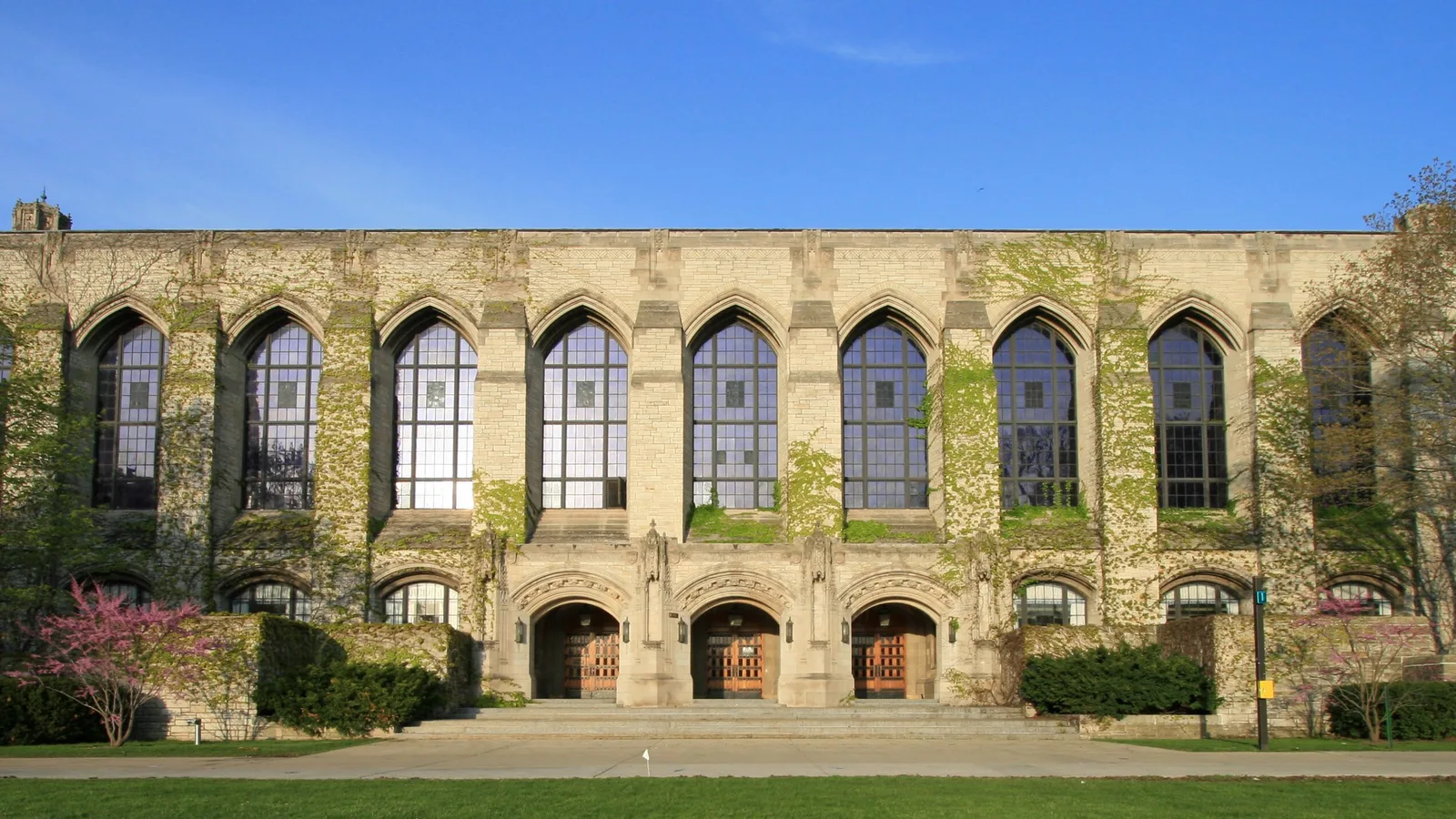
Deering Library on the Northwestern University campus in Evanston. Photo: Madcoverboy (talk) / Wikimedia Commons, CC BY-SA 3.0
For about two weeks in August 1954, Evanston was a stop on the international church calendar. The World Council of Churches held its second assembly in the city, and it remains the only assembly of the council ever held in the United States.
The assembly
The gathering ran from Aug. 15 to Aug. 31, 1954. It came six years after the first assembly in Amsterdam in 1948, where the council was formed. The theme was “Christ, the Hope of the World.” President Dwight Eisenhower welcomed the delegates, and Dag Hammarskjöld, then secretary-general of the United Nations, gave a major address.
The World Council of Churches’ own retrospective gives the title of that speech as “An instrument of faith” and the date as Aug. 20, 1954. It also says Eisenhower urged the delegates to work for a just and lasting peace. The council’s account is the main source here for the content of the meeting. I did not find the text of Hammarskjöld’s speech in the sources opened, so its details are left out.
A theme that split delegates
The theme was easier to print on a program than to agree on. The council’s retrospective says European delegates tended to read hope in apocalyptic terms, while North Americans leaned toward a more progressive view. The assembly reaffirmed the covenant made at Amsterdam and adopted “growing together” as its watchword.
The same account describes visa restrictions that limited the movements of some church leaders from Eastern Europe, which exposed the strain between churches divided by the Iron Curtain. It also notes that a Roman Catholic theological statement arrived too late for the assembly to act on, though the account says it foreshadowed ecumenical practice after the Second Vatican Council.
Beyond the campus
The gathering was not confined to Evanston. The council’s retrospective reports that a service at Soldier Field in Chicago drew more than 100,000 people.
What the assembly meant for Evanston itself is harder to pin down from the sources available. Neither the council’s retrospective nor the city’s reference entry discusses local effects such as hotel demand, housing for delegates or neighborhood reaction, and this article does not guess at them. What can be said is that a lakefront city of fewer than 80,000 people, home to Northwestern University, became for a short time the meeting place for churches from around the world, and that it still holds that distinction among the council’s assemblies.
The record is also a reminder that the meeting was a working session, with disagreements over wording, travel and doctrine, not only a ceremony with prominent guests. Seven decades later, the assemblies that followed have met in other countries, which leaves Evanston’s 1954 meeting a one-off in American church history.
Anyone interested in the primary record can find the assembly’s reports through the World Council of Churches itself, which continues to publish material on its past meetings.
Margaret Whitfield is the editor of The Evanston Edge and covers local government, development and neighborhoods.