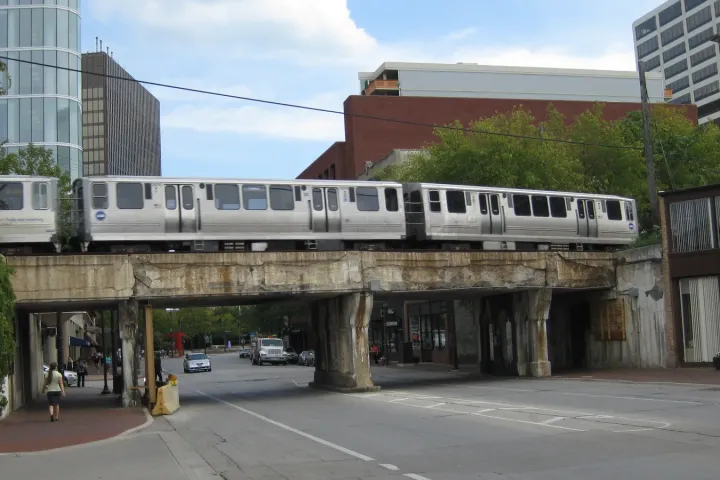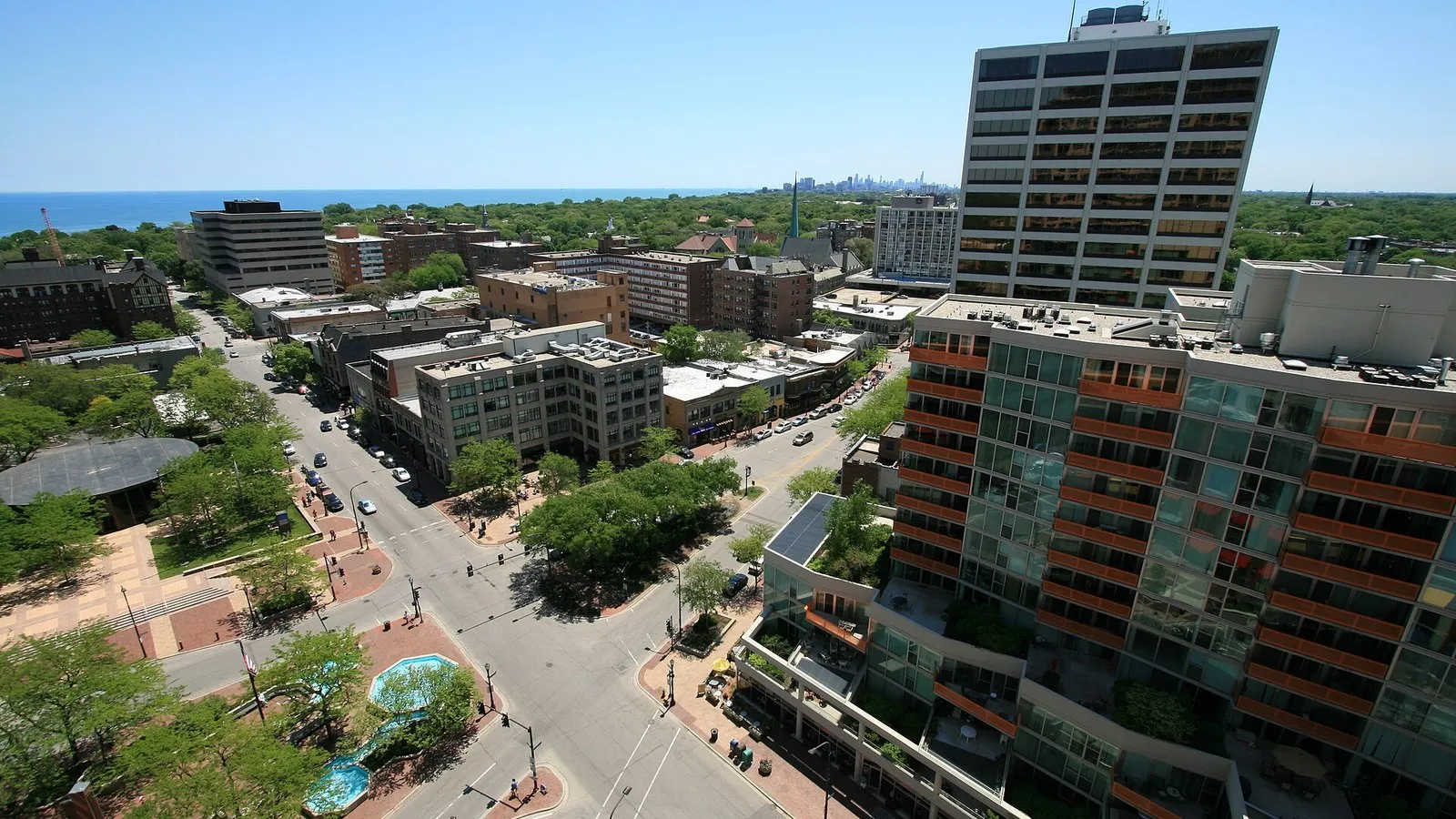
Fountain Square in downtown Evanston. Photo: Madcoverboy (talk), CC BY-SA 3.0, via Wikimedia Commons.
Evanston’s 2027 budget got through its first real vote on Monday night, by one vote, and with most of the hard decisions pushed to Nov. 23.
City Council voted 5-4 on Nov. 9 to introduce the fiscal 2027 budget, which puts total spending at $412,874,778, or $348,977,295 once transfers between city funds are left out. Krissie Harris (2nd Ward), Shawn Iles (3rd), Jonathan Nieuwsma (4th), Bobby Burns (5th) and Juan Geracaris (9th) voted yes. Clare Kelly (1st), Tom Suffredin (6th), Parielle Davis (7th) and Matt Rodgers (8th) voted no, the same split the council has fallen into for most of the year, the Evanston RoundTable reported. The main budget talk didn’t start until after 11 p.m., and the meeting ran past midnight.
The property tax number
The levy is what most homeowners will notice. As introduced, the city’s total property tax levy is $41,835,276, up 8.7% from the 2025 levy of $38,478,400, according to Evanston Now. That total includes the library.
The number is likely to come down. City Manager Luke Stowe’s original plan called for a $5.1 million increase in the city’s levy. Staff then brought a package of cuts and shifts that shave just over $3 million off that, and council members generally signaled they’re on board. Evanston Now put the effect on the city’s portion of the levy at a drop from a 10.1% increase to about 4.1%.
The package, as laid out by financial analyst Brandon Kowalke:
- $1.3 million from raising the General Fund’s assumed vacancy rate to 4.5% through a partial hiring freeze on non-union staff
- $485,000 from cutting three more positions that are vacant or will be after an expected retirement
- $350,000 from a smaller transfer to the fund that pays for alley work
- $230,000 from cutting non-union raises from 2% to 1%
That money would go to the Parks and Recreation Fund, letting its levy fall by the same amount. Those cuts bring the city’s headcount reduction to 8.8 full-time positions, not counting the library.
Stowe told the council that going further would mean laying off people who are working for the city now. “If we were to try to go any further into property tax levy reductions, then we have to explore layoffs of active employees,” he said. He asked council members to tell him which programs they’d want to cut if that’s the direction.
Same split, different answers
The four no votes have been pushing for deeper staff cuts all fall. Rodgers said he has given Stowe specific positions he thinks the city doesn’t need right now. Suffredin argued the city grew on one-time money that’s running out and will have to shrink back. Geracaris said targeting current employees without first deciding which services to drop would be “a really bad idea.” Harris, a yes vote, said residents feel taxed out of town but questioned whether layoffs are the fix.
Behind all of it is the city’s structural deficit. Reserves and one-time funds that have filled the gap are projected to run out by the end of 2027.
Water, rideshares and streaming
The council also advanced a 25% increase in the city water rate, mostly to pay for capital work including state- and federally mandated lead service line replacement, and a 9% increase in trash fees and the single-use bag tax.
A bundle of four other tax and fee increases was briefly voted down 3-6, then revived after Nieuwsma, chairing as acting mayor, pointed out the hole it would leave. The bundle is worth about $3.7 million a year:
- doubling the natural gas use tax from 2.5 to 5 cents per therm, about $750,000
- 30 cents more per rideshare trip, about $1.5 million
- doubling the streaming tax from 5% to 10%, about $1.2 million
- a higher administrative fee on real estate transfers of tax-exempt property, about $250,000
It advanced 7-2, with Kelly and Davis voting no. Kelly and Davis called the gas tax increase regressive, and Suffredin suggested a bigger rideshare increase to soften it. Staff will bring back options in two weeks.
The levy ordinance also passed 5-4, but with a different lineup: Harris voted no and Suffredin voted yes.
The library and the general assistance levy
The Evanston Public Library budgets separately. Its levy is set at $9,967,050, up 2.5%. The general assistance levy, which funds emergency help for low-income residents, rises to $1,306,875, a 70% increase, according to Evanston Now.
Next steps
Final adoption votes are scheduled for Nov. 23. If the budget doesn’t pass then, the council has one more regular meeting on Dec. 14 before the year-end deadline. Residents can comment at either meeting or through their council member.
Add The Evanston Edge as a preferred source on Google (opens in a new tab)
Thomas Brennan covers property taxes, real estate, transit and the local economy for The Evanston Edge.