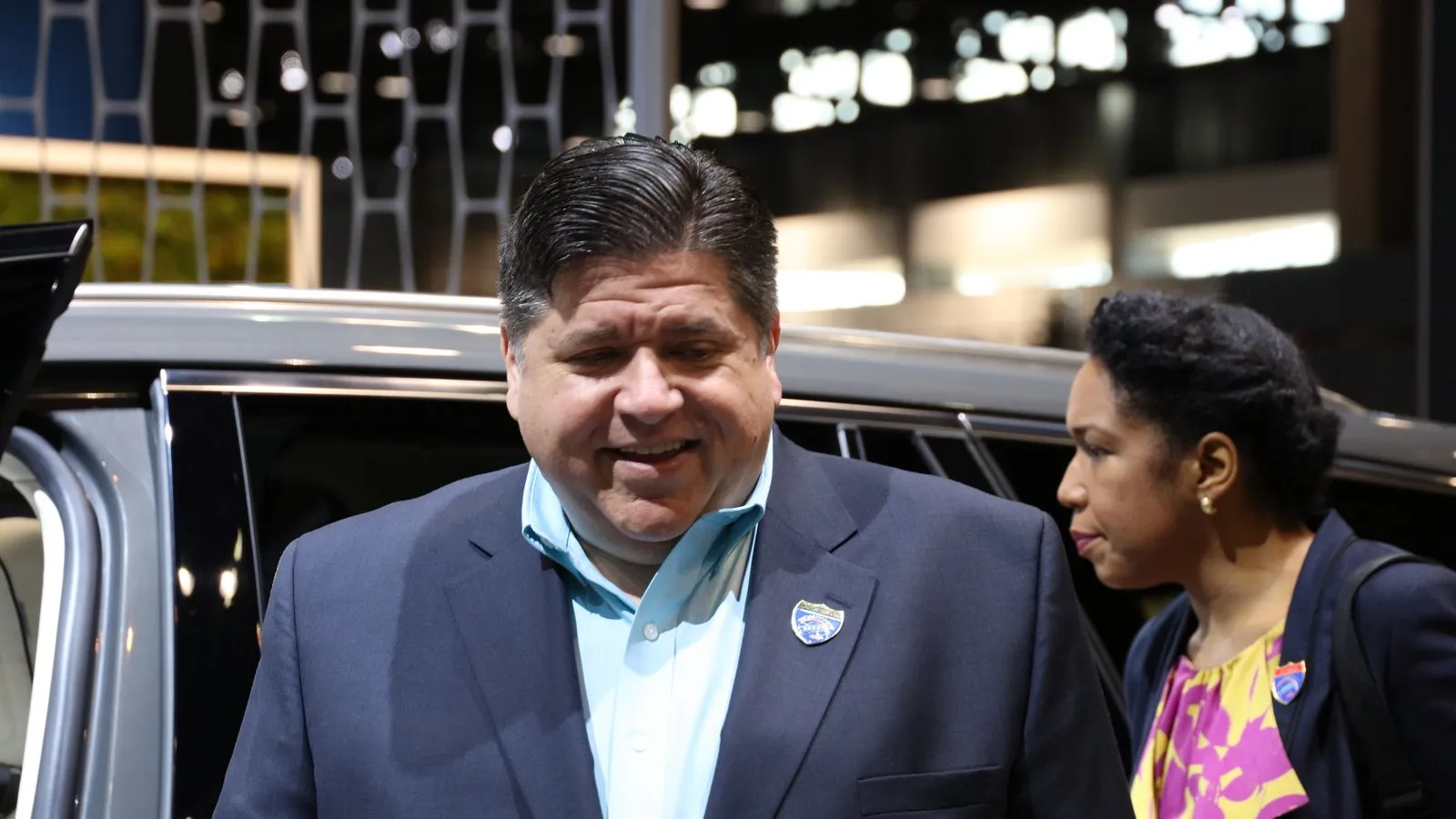
Gov. JB Pritzker at the Chicago Auto Show in 2019. Photo: Raymond Cunningham from Homer Illinois, USA / Wikimedia Commons, CC BY-SA 2.0
Illinois will stay out of the new federal scholarship tax credit when it starts Jan. 1, Gov. JB Pritzker announced Tuesday. The decision closes off one route for Illinois families to get scholarship money for school costs, though Evanston residents who want the federal tax break can still claim it.
The governor’s Nov. 24 announcement said Illinois will not opt in to what his office calls the Federal Scholarship Tax Credit voucher program. Congress created the credit last year in H.R. 1, the budget and tax law the president calls the One Big Beautiful Bill Act. States had until Jan. 1 to decide whether to take part.
How the credit works
A taxpayer who gives to an approved scholarship-granting organization can take a dollar-for-dollar federal credit of up to $1,700 a year. The organizations then hand out scholarships to elementary and high school students whose families earn up to three times their area’s median income. The money can go to private, public or charter school costs, including tutoring and special education services, according to WTTW’s summary of the program.
The credit itself comes off a federal return, and the state’s books aren’t touched. What a state controls is whether its own scholarship organizations are put on the list, and that decides whether students living in the state can get those scholarships.
That is the practical effect for Evanston. Families here, at District 65, at Evanston Township High School and at the city’s private and parochial schools, won’t see scholarships from an Illinois organization under this program. An Evanston taxpayer can still give to an approved organization in a participating state and claim the federal credit, WTTW reported, but that money goes to students in that state.
Why the governor said no
Pritzker’s office said it reviewed the Treasury Department and IRS guidance and listed several objections. The federal rules bar states from putting tighter standards on scholarship organizations than the law does, from limiting which kinds of schools can benefit, and from narrowing what the money can pay for.
The office also said the credit has no cap and estimated it would cost the federal government $2.7 billion to $6.1 billion in revenue a year. It argued that the income limit of three times the area median means much of the benefit would go to families that are not low-income, often to cover private tuition they already pay.
“At a time when public school education needs investments more than ever, we should not siphon money from public schools for private education,” Pritzker said in the announcement. “Taxpayer funding should not subsidize donations to private schools that could discriminate based on religion, sexual orientation, or other characteristics.”
The release included statements of support from Illinois members of Congress, including U.S. Rep. Jan Schakowsky, whose district includes Evanston. It also quoted the Rev. Jillian Westerfield of Lake Street Church of Evanston, who called herself “a proud graduate and parent” of public schools.
The other side
Supporters of the credit describe it as money that costs the state nothing. The Catholic Conference of Illinois, which speaks for one of the state’s largest private school operators, said it was “perplexed” because the scholarships can also be used in public schools, Capitol News Illinois reported. Senate Republican Leader John Curran of Downers Grove said the program “offered free money to help struggling Illinois students and their families.”
Illinois ran its own version until recently. The Invest in Kids program, created in 2017, gave a 75% state income tax credit for donations to private school scholarships and was capped at $75 million a year. Lawmakers let it expire at the end of 2023.
At least 30 states have opted in, including some led by Democratic governors such as New York and Colorado. Illinois joins Arizona, Minnesota, Wisconsin, Oregon and Virginia among the states whose governors have said no.
What could still change
The decision sits with the governor, and the Catholic Conference said Pritzker “still has time to reconsider” before the Jan. 1 start.
For Evanston households, the decision doesn’t change local school funding. District 65 and District 202 budgets are set by their own school boards, separate from the city’s budget fight this month. Anyone who planned to give to a scholarship group in 2027 for the credit will need to find an approved organization in a state that opted in, and should check the IRS rules before giving.
More local money coverage is in our Finance section, including what the Jan. 1 water rate increase means for a typical home.
Add The Evanston Edge as a preferred source on Google (opens in a new tab)