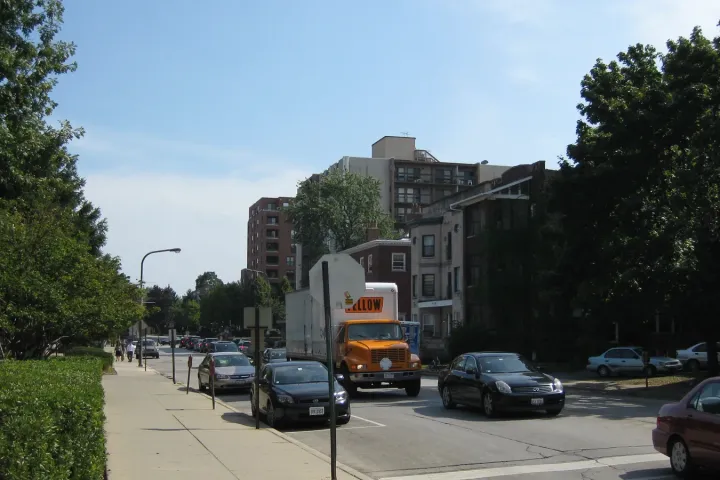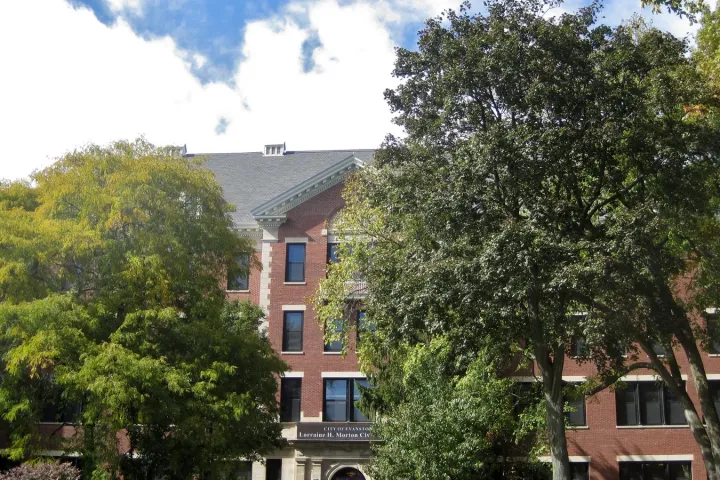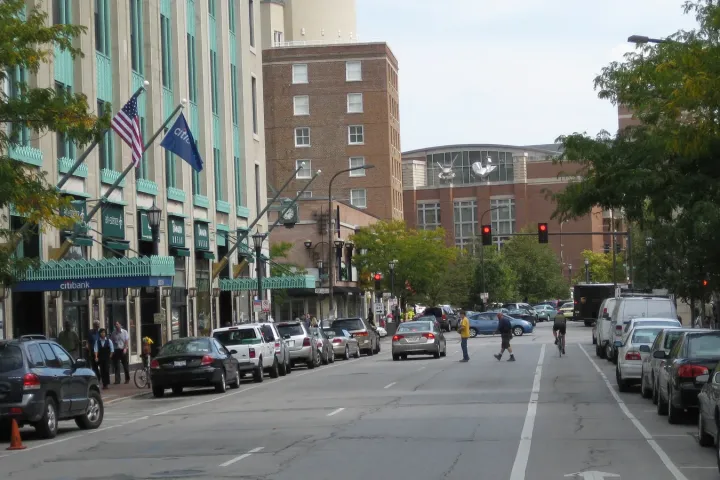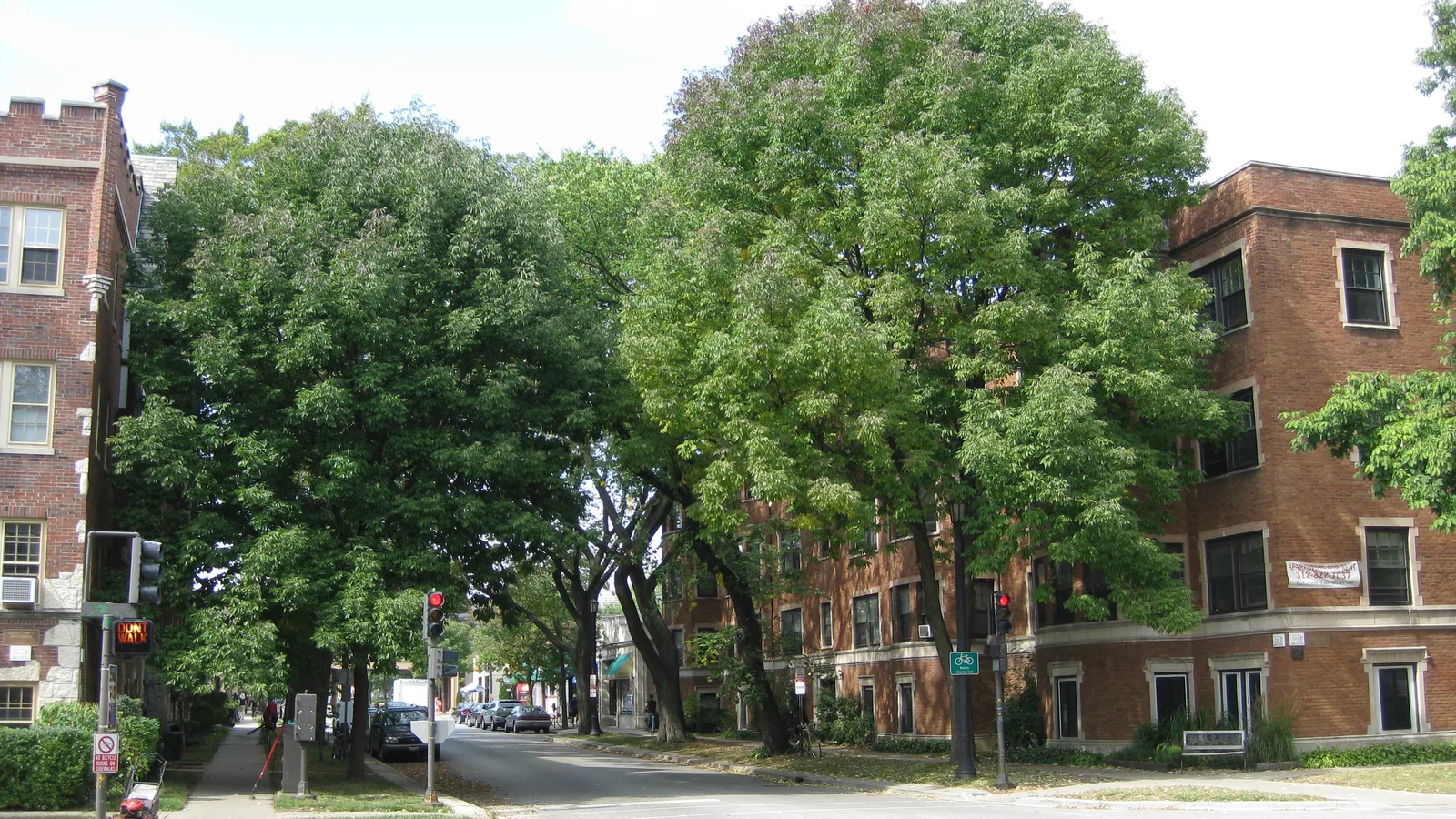
Brick apartment buildings and shade trees on an Evanston corner. Photo: Eric Fredericks from Rancho Cordova, CA, United States / Wikimedia Commons, CC BY-SA 2.0
Open an Evanston property tax bill and the first surprise is how many names are on it. The City of Evanston is one of them, but it is far from the biggest. According to the city’s own property tax explanation page, the city’s portion comes to about 16 percent of the total bill. Most of the rest goes to the schools.
Who sends a claim on your bill
The city’s page lists the governments that tax Evanston property: Cook County, the City of Evanston, the Evanston Library, Consolidated Elections, Evanston General Assistance, School District 65, School District 202 (Evanston Township High School), the Cook County Forest Preserve District, the Metropolitan Water Reclamation District, Oakton Community College District 535 and the North Shore Mosquito Abatement District. Two park districts, Ridgeville and Lighthouse, apply to parts of town only.
Each of these bodies decides, within the limits of state law, how many dollars it needs to collect from property owners. That dollar amount is its levy. The city does not set what the school districts ask for, and it has no say over what the county or the water reclamation district requests. They all appear together because property owners get one bill covering every district that serves their address.
From levy to rate to your bill
The math is simple in outline. Each district divides its levy by the total equalized assessed value, or EAV, of all the property inside its boundaries. The result is that district’s tax rate. Your bill is then the rate multiplied by your own property’s EAV, added up across every district that serves you.
EAV is not the market value of a house. It is the assessed value after the state’s equalization process, and exemptions can reduce it further. One consequence is worth understanding: if a district’s levy stays flat but the total EAV in town rises, the rate falls. If your own assessment rises faster than your neighbors’, your share of the pie grows even when nothing else changes.
The city’s page publishes average composite rates for tax year 2023, the bill paid in 2024. The page does not state the units, so treat the numbers as relative sizes. School District 65 carried the largest rate at 3.322, followed by Evanston Township High School District 202 at 2.112. The City of Evanston was 1.269, Cook County 0.493, the Metropolitan Water Reclamation District 0.345, Oakton Community College 0.227, the Evanston Library 0.221, General Assistance 0.029 and the mosquito abatement district 0.008. Added together, those nine bodies come to 8.026. Dividing the city’s rate by that total gives about 15.8 percent, which squares with the city’s own “approximately 16 percent” figure.
By the same arithmetic, the two school districts together account for roughly two-thirds of the combined rate. The Ridgeville and Lighthouse park districts have their own rates, 0.106 and 0.072, and are left out of the total because they cover only some properties. The page notes that an individual bill may differ from these averages depending on which districts serve the address.
What the city’s slice pays for
The city says property taxes fund about 10 percent of its general fund operations, and that it is working to diversify its revenue so it leans less on the tax. It also means a change in the city’s levy moves a homeowner’s total bill by a smaller amount than the percentage headline suggests. A 10 percent jump in the city’s levy, with everything else equal, adds roughly 1.6 percent to the whole bill.
That is also why a bill can rise even when the city holds its levy steady. School budgets, county decisions and reassessments all feed in. Reading the bill line by line, and comparing each district’s rate year over year, is the quickest way to see where a change came from.
Residents with questions about a specific bill can reach the city through 311 at (847) 448-4311, a number listed on the explanation page. Questions about assessed values themselves belong with the Cook County offices that set them.
Figures are from the City of Evanston’s property tax bill explanation page.
Thomas Brennan covers property taxes, real estate, transit and the local economy for The Evanston Edge.